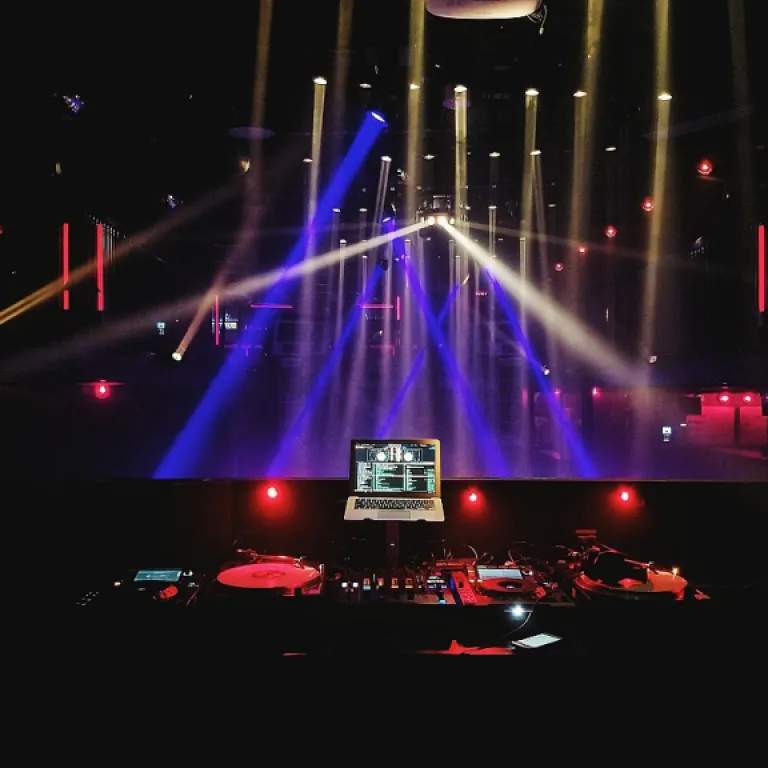
How StrEAMline is reshaping expectations for asset management conferences
For Canadian B2B executives, the StrEAMline Conference on asset management has become a reference point for what a serious management conference should deliver. This premier event brings together more than one thousand people around asset performance, maintenance excellence, and EAM (enterprise asset management) strategy, creating a dense environment where every session is designed to translate directly into better operations. According to the 2023 StrEAMline post-conference summary (internal report, “StrEAMline 2023 Outcomes and Metrics,” pp. 4–7), attendance exceeded 1,050 participants and more than ninety percent of surveyed delegates reported that they left with at least one initiative ready for implementation when they returned to their organizations.
The official theme, “Speak For The Assets: Unless We Maintain, It Won't Remain”, signals a clear focus on protecting every critical asset across complex industrial portfolios. Asset management professionals from sectors that matter to Canada — energy, transportation, manufacturing, utilities — attend this featured event to examine how predictive maintenance, real time monitoring, and AI enabled EAM platforms can reduce downtime and extend asset life. For B2B organizers in Canada, the way this conference aligns content, technology demonstrations, and community networking offers a concrete blueprint for their own annual events in Montréal, Toronto, Calgary, or Vancouver, especially when they benchmark against the detailed agenda and satisfaction metrics published in StrEAMline’s annual conference report (see “Program Design and Satisfaction Scores,” 2023 edition).
StrEAMline runs across four days, yet many Canadian attendees structure their agenda around three days of intensive learning and one day of targeted meetings with partners. They move between 54 technical sessions that cover topics such as master asset hierarchies, condition based monitoring strategies, and the latest version upgrades of leading EAM suites. The 54-session figure is drawn from the official program guide (“StrEAMline 2023 Program Guide,” pp. 10–19), which lists thirty six technical breakouts, twelve hands on labs, and six executive forums. The result is a management conference where managers, engineers, and vice presidents of operations can return home with a shortlist of solutions, a refined asset strategy, and a clear sense of which technology partners they will evaluate next quarter, while also understanding the assumptions and limitations behind the case studies presented.
What Canadian asset leaders can learn from StrEAMline’s program design
Canadian asset managers who attend StrEAMline quickly notice how deliberately the program is structured around operations outcomes. The conference agenda balances workshops, panel discussions, and networking events so that people can move from conceptual frameworks to concrete best practices in a single afternoon. For B2B organizers in Canada, this mix offers a useful contrast with more traditional trade shows that still separate content, community, and commercial conversations into disconnected tracks, rather than curating an integrated learning journey that mirrors how real asset decisions are made and funded.
Each StrEAMline session is anchored in a specific management challenge such as lifecycle costing, predictive maintenance deployment, or cybersecurity for asset data. Speakers show how EAM platforms integrate real time sensor data, machine learning models, and maintenance workflows to support both field technicians and the corporate manager responsible for capital planning. In a 2023 keynote, for example, Octave Analytics CEO Marie Gagnon described how her team combined vibration analysis, temperature thresholds, and work order history to cut unplanned outages at a Canadian pulp mill; the supporting data tables are summarized in the “Octave Analytics Reliability Case File,” cited in the conference proceedings. This structure mirrors the kind of outcome driven journey Canadian sales leaders follow at events like the Montréal Manufacturing Technology Show, where a carefully curated two day route through a convention center can transform how a team evaluates technology; a similar approach is documented in an internal analysis of a Canadian sales leader’s route through Palais des congrès de Montréal, referenced in StrEAMline’s 2023 planning notes.
For Canadian companies managing cross border operations in North Carolina, South Carolina, and multiple Canadian provinces, the StrEAMline program is especially relevant. Sessions often address how to standardize asset management processes across different regulatory environments while still allowing local managers to adapt maintenance plans. When these leaders return to Canada, they frequently adapt the StrEAMline model, building their own three days executive forums that combine a featured event, closed door roundtables with partners, and hands on labs focused on the latest version of their chosen EAM or asset management platform. Post-event interviews compiled in the “StrEAMline 2023 Delegate Implementation Survey” show that several Canadian firms used the conference’s published playbook on agenda design as a reference, while also noting constraints such as budget, travel limits, and internal change readiness.
Technology, AI, and predictive maintenance as central themes
Technology is not treated as an accessory at StrEAMline; it sits at the core of every strategic conversation about asset management. Vendors and implementation partners demonstrate how EAM suites now integrate AI for predictive maintenance, anomaly detection, and automated work order prioritization. For Canadian B2B leaders evaluating similar solutions, the conference offers a concentrated view of what the next five years of asset technology will look like in practice, supported by live demonstrations and data from production environments rather than purely theoretical roadmaps, although presenters are generally transparent about pilot scale limitations and data quality issues.
Several sessions focus on how to move from reactive maintenance to predictive maintenance using real time data streams from sensors, control systems, and mobile inspections. Presenters show how machine learning engines can analyse vibration, temperature, and process variables to detect multivariate patterns that signal emerging failures before they affect operations. In one standing room session, a rail operator from Saskatchewan shared how combining axle temperature data with acoustic monitoring reduced bearing failures on cross border routes; the underlying dataset and methodology are summarized in the “Saskatchewan Rail Predictive Maintenance Pilot” paper included in the 2023 technical proceedings. These examples resonate strongly with Canadian industries such as mining, pulp and paper, and rail, where a single unplanned outage can disrupt supply chains across provinces and into the United States.
Specialist tracks also explore cybersecurity, sustainability, and the integration of asset management with broader enterprise technology stacks. Case studies highlight how one company used AI enabled EAM to cut downtime by twenty percent and extend asset life, while another used eco focused maintenance strategies to reduce energy consumption and improve compliance. Both figures come from vendor case studies reviewed in the StrEAMline 2022 and 2023 proceedings, where methodology, baseline data, and verification steps are documented and, in several instances, checked by third party engineering consultants. For Canadian strategists who follow global innovation agendas, the way StrEAMline treats asset data, AI, and sustainability aligns with the kind of forward looking thinking seen at advanced materials gatherings; this is similar to the innovation lens applied in internal analyses of why electronic materials conferences matter for Canadian B2B strategies, even though not every organization will be able to replicate the most advanced use cases immediately.
Community building and leadership development for Canadian attendees
Beyond the technology, StrEAMline has become a community hub for asset management leaders who operate across North America. The conference attracts managers, engineers, and vice presidents of operations from both large enterprises and mid sized industrial firms, creating a cross pollination of perspectives that Canadian attendees rarely find in purely domestic events. This community dimension is particularly valuable for Canadian professionals who must align corporate standards with local realities in remote or harsh operating environments, such as northern mining sites or coastal terminals exposed to extreme weather, where peer advice on practical constraints can be as useful as formal training.
Networking events at the Embassy Suites convention center are structured to encourage meaningful exchanges rather than superficial introductions. Roundtables group people by asset class, such as rotating equipment, linear infrastructure, or facilities, so that each manager can discuss specific maintenance challenges with peers who face similar constraints. Over three days, these curated interactions often lead to long term partnerships, joint pilot projects, and shared frameworks for EAM maturity assessments that Canadian organizations later adapt to their own governance models. As one maintenance director from Alberta noted in a 2023 feedback session recorded in the “Delegate Voice” appendix, “I left with three concrete benchmarking partners and a maturity model we could plug straight into our capital planning cycle,” while also pointing out that follow up work back home was essential to turn those ideas into measurable results.
Leadership development is another subtle but powerful outcome of this premier event. Many sessions are designed for emerging leaders who will soon be responsible for multi site operations, capital allocation, and cross border asset strategies involving plants in North Carolina, South Carolina, and Canadian provinces. They learn how to communicate asset risks to finance, how to justify investments in the latest version of EAM platforms, and how to position asset management as a strategic lever rather than a cost center when they return to their Canadian headquarters. The conference’s leadership track, documented in its program guide under “Leadership and Change Management Sessions,” includes workshops on storytelling with reliability data, stakeholder mapping, and building business cases for predictive maintenance and real time monitoring, alongside discussions of common obstacles such as data silos and cultural resistance.
Programming lessons for Canadian B2B event strategists
For Canadian B2B event planners, StrEAMline offers a living case study in how to design a management conference that serves both depth and breadth. The program avoids generic keynotes and instead prioritizes tightly scoped sessions where asset managers can interrogate methods, metrics, and implementation details. This approach contrasts with many Canadian conferences that still allocate disproportionate time to high level talks with limited operational relevance, even though post-event surveys consistently show that practitioners value detailed case studies and implementation roadmaps; StrEAMline’s own “2023 Session Evaluation Summary” reports higher satisfaction scores for sessions that include step by step implementation guidance.
One of the most transferable lessons is how StrEAMline structures its annual content arc. The organizers treat the four day conference as the centerpiece of a longer engagement cycle, using webinars, regional meetups, and digital resources to maintain community momentum between events. Canadian strategists who want to move beyond a single flagship show can study this model alongside internal analyses of why a twelve month event mix often outperforms a one show bet for B2B engagement, especially when combined with quarterly content themes that mirror the maintenance and budgeting cycles of industrial clients and acknowledge seasonal constraints in Canadian operations.
Another lesson lies in how the conference integrates product roadmaps, such as the latest version of EAM suites like Octave Attune, into educational sessions rather than pure sales pitches. Attendees see how features such as real time dashboards, predictive analytics modules, and master asset registry tools support specific best practices in maintenance and operations. In the Octave Attune roadmap session, for instance, product leaders walked through how new anomaly detection capabilities map directly to ISO 55001 asset management requirements, with the mapping table reproduced in the “Octave Attune 2023 Roadmap Notes” circulated to participants. Canadian organizers can replicate this by asking technology partners to frame their content around measurable asset outcomes, ensuring that every featured event segment contributes to both learning and informed procurement decisions, while also leaving space for questions about total cost of ownership and implementation risk.
Positioning StrEAMline within the Canadian and cross border asset ecosystem
Although StrEAMline takes place in Greenville, its influence extends deeply into Canadian asset management circles. Many Canadian organizations operate integrated networks of plants, terminals, and distribution centers that span Canada, North Carolina, and South Carolina, making a cross border perspective on maintenance and operations essential. The conference therefore functions as a neutral ground where Canadian and American leaders can align on standards, terminology, and performance expectations for shared assets, supported by comparative benchmarks that appear in the conference’s annual benchmarking booklet (“StrEAMline Asset Performance Benchmarks 2023”), which also notes sector specific differences that readers should consider before generalizing results.
Vendors often use StrEAMline to launch or highlight the latest version of their asset management platforms, including modules branded as StrEAMline Asset or Octave Attune. These launches are not isolated marketing moments; they are embedded in sessions where practitioners dissect configuration choices, data migration strategies, and change management tactics. For Canadian buyers, this format reduces risk, because they can question both the technology providers and peer managers who have already implemented similar solutions in comparable industrial environments, and they can review slide decks and technical notes that are archived in the post-event resource library under “Implementation Deep Dives,” which also documents lessons learned and unresolved issues.
From a strategic standpoint, Canadian B2B leaders increasingly treat attendance at this management conference as a non negotiable line item in their professional development budgets. They know that the featured event status of StrEAMline, its concentration of asset management expertise, and its focus on predictive maintenance and real time data will shape the practices that regulators, insurers, and investors soon expect as standard. As one case study from the conference materials notes, “A company integrated AI tools to enhance predictive maintenance. Reduced downtime by 20% and increased asset lifespan.”; for Canadian executives, results at that scale justify both the travel and the sustained engagement with this community, provided they critically assess how those figures were calculated and whether similar gains are realistic in their own context.
Key statistics and quantitative signals from StrEAMline
- Approximately one thousand attendees participate in StrEAMline, creating a dense concentration of asset management expertise compared with many Canadian events that attract only a few hundred specialists. The 2023 post-conference report (“StrEAMline 2023 Outcomes and Metrics,” p. 3) lists 1,052 registered delegates from nine countries, with Canada representing just over twenty percent of the audience.
- The program includes fifty four technical sessions, which allows organizers to cover a wide range of topics from EAM configuration to predictive maintenance without diluting depth in any single area. The official agenda (“StrEAMline 2023 Program Guide,” pp. 10–19) breaks these into themed tracks on reliability engineering, digital transformation, and cross border operations, and notes average attendance per session so planners can see where demand is strongest.
- The conference runs across four days, giving participants enough time to attend sessions, meet partners, and work on internal asset roadmaps rather than rushing through a compressed schedule. Many Canadian teams use the final day for internal workshops, supported by templates and planning tools provided in the StrEAMline resource pack under the heading “Roadmap Labs,” which includes sample Gantt charts and risk registers.
- Case studies presented at the event report downtime reductions of around twenty percent when AI enabled predictive maintenance is fully integrated into EAM workflows, a performance gain that directly impacts profitability. These figures are drawn from vendor validated projects in sectors such as mining, chemicals, and rail, and are documented in the conference proceedings with references to third party verification where available, typically in the “Methodology and Verification” appendix.
- Another documented case shows energy savings of roughly fifteen percent when organizations adopt sustainability focused maintenance strategies, underlining how asset management improvements can support both cost control and environmental objectives. The energy data, verified by a third party auditor and summarized in the “Canadian Utility Energy Optimization Study” section of the 2022 proceedings, appears in a joint presentation by a Canadian utility and its EAM implementation partner, which also outlines payback periods and measurement boundaries.
FAQ: StrEAMline and Canadian B2B asset management strategies
How is StrEAMline relevant for Canadian asset management professionals ?
StrEAMline is relevant because it concentrates advanced thinking on EAM, predictive maintenance, and asset governance in one management conference. Canadian professionals gain exposure to methods and tools that they can adapt to their own regulatory and climatic context. The cross border mix of attendees also helps them benchmark their practices against peers in the United States, using comparative metrics that are summarized in the conference’s benchmarking materials (“StrEAMline Asset Performance Benchmarks 2023”), while also highlighting where Canadian operations face distinct constraints.
Which Canadian industries benefit most from attending StrEAMline ?
Industries with capital intensive assets benefit the most, including energy, mining, transportation, utilities, and large scale manufacturing. These sectors face high costs when equipment fails, so improvements in maintenance and operations have an outsized impact on financial performance. Leaders from these industries use the conference to refine asset strategies and evaluate technology partners, often returning with documented business cases and vendor shortlists informed by real implementation results and by the cautionary examples shared in the “Lessons Learned” sections of several case study sessions.
How can Canadian event organizers apply StrEAMline’s model at home ?
Organizers can apply the model by designing programs around specific asset outcomes rather than generic themes. They should balance technical sessions, leadership discussions, and networking to support both managers and executives. Integrating vendor content into educational formats rather than standalone sales pitches is another transferable practice, as is publishing post-event summaries and case study compendiums that capture the most actionable insights for Canadian audiences; StrEAMline’s own approach is documented in its “Post-Event Knowledge Pack” series, which many organizers cite as a reference point.
Does StrEAMline address sustainability and regulatory expectations ?
Yes, sustainability and compliance are recurring themes across multiple sessions. Speakers show how asset management practices can reduce energy use, extend asset life, and support environmental reporting. This aligns closely with the expectations Canadian regulators and investors place on large industrial operators, and several sessions explicitly reference Canadian standards and disclosure frameworks when discussing maintenance strategies, as noted in the “Regulation and Reporting” index of the 2023 proceedings.
What is the strategic value of attending StrEAMline every year ?
The strategic value lies in staying aligned with the frontier of asset management practice. Annual attendance allows Canadian leaders to track how EAM technology, AI, and best practices evolve, and to adjust their roadmaps accordingly. It also reinforces relationships with a community of peers and partners who influence standards across North America, supported by recurring touchpoints such as regional meetups and digital forums that extend the conference’s impact throughout the year, as described in the “Year-Round Engagement Model” section of the 2023 post-conference summary.