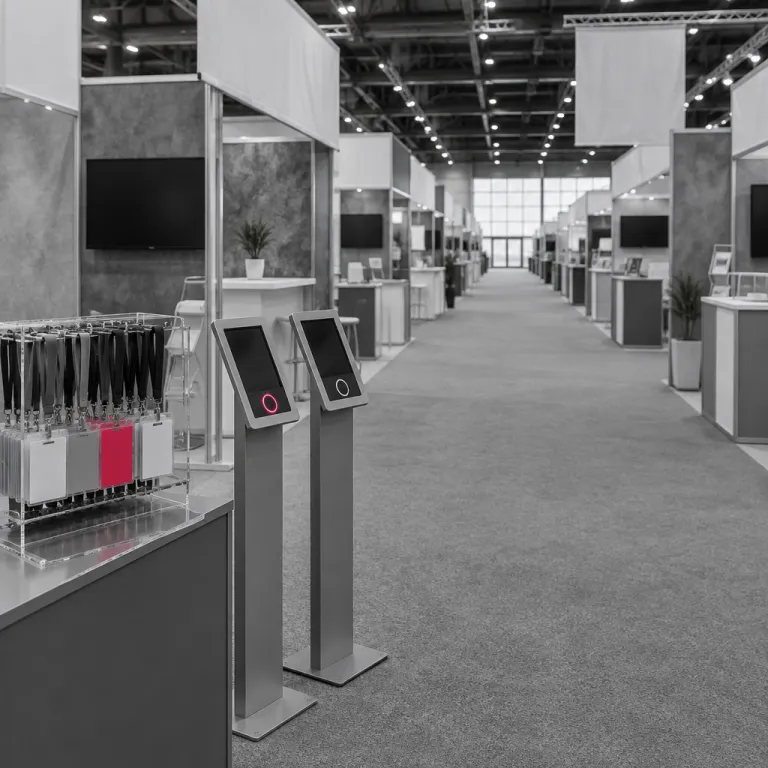
The silent visitor problem in Canadian trade show booths
Walk any Canadian trade show floor and you will see crowded aisles. Inside each booth, exhibitors usually capture a lead only when an attendee stops to talk with a sales representative. Yet a large share of visitors browse quietly, handle products, scan digital displays, then leave without generating any event lead in your systems.
Research on business events shows that a significant portion of attendees never interact with booth staff, which means your lead capture methods are biased toward extroverts and existing relationships. Your show lead report reflects conversations, not total booth traffic, so the data underestimates real engagement and distorts event ROI calculations. When 67 % of attendees represent new prospects and 81 % have buying authority, every unrecorded visit is a missed lead generation opportunity for your sales teams.
Traditional capture tools such as rented badge scanners and paper forms only record leads when staff remember to scan or write something. In practice, this manual capture creates gaps in data, especially during peak booth traffic when engagement is highest and teams are overloaded. The result is that post event follow up focuses on a narrow slice of attendees, while the majority of potential leads remain invisible to your CRM and to your digital business analytics.
How NFC badge taps enable passive lead capture at trade shows
Passive lead capture trade show NFC strategies use near field communication badge technology to record visits without requiring a conversation. An NFC badge contains a small chip that exchanges data with a reader when attendees tap a pedestal, product plinth, or interactive screen inside your booth. This tap creates a digital event lead in real time, even if the visitor never speaks to your équipe or hands over a business card.
Unlike traditional badge scanners that depend on staff, NFC capture tools can be embedded in multiple touchpoints across the booth to track different levels of engagement. A tap at the entrance might signal light interest, while taps at a demo station or pricing wall indicate deeper intent and higher quality leads for sales teams. Because the technology runs continuously, exhibitors can capture leads from both active engagers and silent browsers, closing the gap between actual booth traffic and recorded data.
Exhibitors using digital lead capture apps connected to NFC readers typically collect several times more leads than those relying on manual capture methods. When passive lead capture trade show NFC deployments integrate with a modern event app and your CRM, each badge tap automatically enriches contact records with behavioural données. This automation reduces administrative workload, improves conversion rates through better segmentation, and supports a more rigorous scoring system that separates signal from noise in your event lead pipeline, as outlined in many advanced B2B event lead generation frameworks.
Designing a passive capture architecture that fits Canadian exhibitors
Building an effective passive lead capture trade show NFC architecture starts with mapping your booth journey. Identify where attendees naturally pause, such as product islands, demo counters, or digital content walls, then place NFC capture tools at those points to record both light and deep engagement. Each reader should be clearly signposted so attendees understand that a simple badge tap will send them curated digital business content instead of forcing them to exchange business cards.
From a technology perspective, Canadian exhibitors need capture apps that can operate reliably with venue Wi-Fi constraints and sync data in real time when connectivity allows. A robust event app or dedicated capture apps should buffer data locally, then push it securely into your CRM and marketing automation platform once the connection stabilizes. Integrating this stack with your broader martech environment helps close the integration gap that often stalls post show follow up and undermines event ROI.
To make the most of NFC capture methods, define clear data schemas before the event so every tap generates structured données that your sales teams can use. For example, differentiate an event lead created at a top of funnel content station from a show lead generated at a pricing calculator or configuration tool. When your capture methods are intentional, each badge tap becomes a meaningful signal that supports better lead generation, more accurate conversion rates, and a cleaner handoff from marketing to sales in the days following the show.
From raw taps to revenue: scoring, routing, and follow up
Passive capture only creates value when exhibitors transform raw NFC badge tap data into prioritized leads and timely follow up. The first step is to classify each event lead by engagement depth, using rules that combine tap locations, dwell time, and any voluntary form fills from capture apps. Companies that score leads at the point of capture see 38 % higher conversion rates, because sales teams focus on the most qualified opportunities while marketing nurtures the rest.
Once your scoring logic is defined, route different tiers of leads into tailored CRM workflows that align with your sales process and Canadian market realities. High intent leads from product demos might trigger immediate outreach from account executives, while lighter engagement leads receive automated but personalized post event email sequences and targeted social media retargeting. This structured approach ensures that up to 80 % of trade show leads do not languish without follow up, which remains a chronic issue for many exhibitors.
To support this orchestration, align your event app, capture tools, and CRM so that every badge tap updates contact records in real time with clear engagement tags. This integration allows marketing to report on event ROI using metrics such as pipeline generated, influenced revenue, and velocity through the funnel. When you later conduct a mid year event budget review with finance stakeholders, you can use this data driven narrative to defend or reallocate spend toward shows, booths, and capture methods that consistently produce high quality leads and measurable business impact.
Budget, vendor selection, and practical deployment in Canada
For mid market Canadian exhibitors, the shift from manual badge scanners and paper business cards to passive lead capture trade show NFC systems raises legitimate budget questions. A practical approach is to pilot NFC capture tools at one or two strategic events, focusing on a flagship booth where incremental leads will have the greatest revenue impact. By comparing event ROI and conversion rates between NFC enabled shows and traditional setups, you can build a credible business case for broader deployment.
Vendor selection should balance technology capabilities with on site support across major Canadian cities such as Toronto, Montréal, Vancouver, and Calgary. Look for providers whose capture apps integrate natively with your CRM, support bilingual interfaces, and offer clear data governance policies that respect Canadian privacy regulations. During evaluation, ask vendors to demonstrate how their systems handle offline data capture, real time syncing, and segmentation of different engagement levels from multiple NFC touchpoints inside the booth.
Operationally, success depends on training your équipe to explain the value of badge taps to attendees and to complement passive capture with targeted conversations. Staff should encourage visitors to tap their badge at key stations, then use the resulting data to tailor live discussions rather than relying solely on manual note taking. Over time, this blended model of passive and active capture leads to richer données, stronger engagement, and a more predictable pipeline from trade show investments, especially when combined with disciplined post event follow up and continuous optimization of booth design.
FAQ
How does NFC badge tap capture differ from traditional badge scanning ?
NFC badge tap capture uses embedded readers placed around the booth, while traditional badge scanning relies on staff pointing handheld devices at badges. With taps, attendees initiate the interaction by touching their badge to a reader, which automatically creates a digital record without staff involvement. This approach captures more visits, especially from silent browsers who would never queue for a manual scan.
Is passive NFC capture compliant with Canadian privacy expectations ?
Most Canadian events already encode attendee data on badges under clear registration terms, and NFC taps simply use that existing framework. Exhibitors should still provide transparent signage explaining what a tap does, what data is captured, and how it will be used for follow up. Offering easy opt out options and respecting unsubscribe requests helps maintain trust while still enabling effective lead capture.
What infrastructure do I need to start with passive NFC capture ?
At a minimum, you need NFC enabled badge infrastructure from the event organizer, compatible readers or pedestals, and capture apps that sync with your CRM. Many vendors provide turnkey kits that include hardware, software, and analytics dashboards tailored to trade show environments. Planning power access, network connectivity, and physical placement of readers is essential to ensure reliable data capture throughout the event.
How should I measure the impact of NFC badge taps on event ROI ?
Start by comparing the number of leads and show leads captured through taps versus traditional methods at the same event. Then track how those leads progress through your pipeline, measuring conversion rates, deal size, and sales cycle length relative to other channels. Over several events, this data will show whether passive capture contributes meaningfully to revenue and justifies continued investment.
Can passive NFC capture replace conversations with booth staff ?
Passive NFC capture is designed to complement, not replace, human engagement at the booth. Conversations remain critical for complex B2B sales, qualification, and relationship building with key attendees. The real value of NFC taps is ensuring that even brief or silent visits generate usable data, so your équipe can follow up intelligently after the show and not rely solely on memory or handwritten notes.